

AICAR
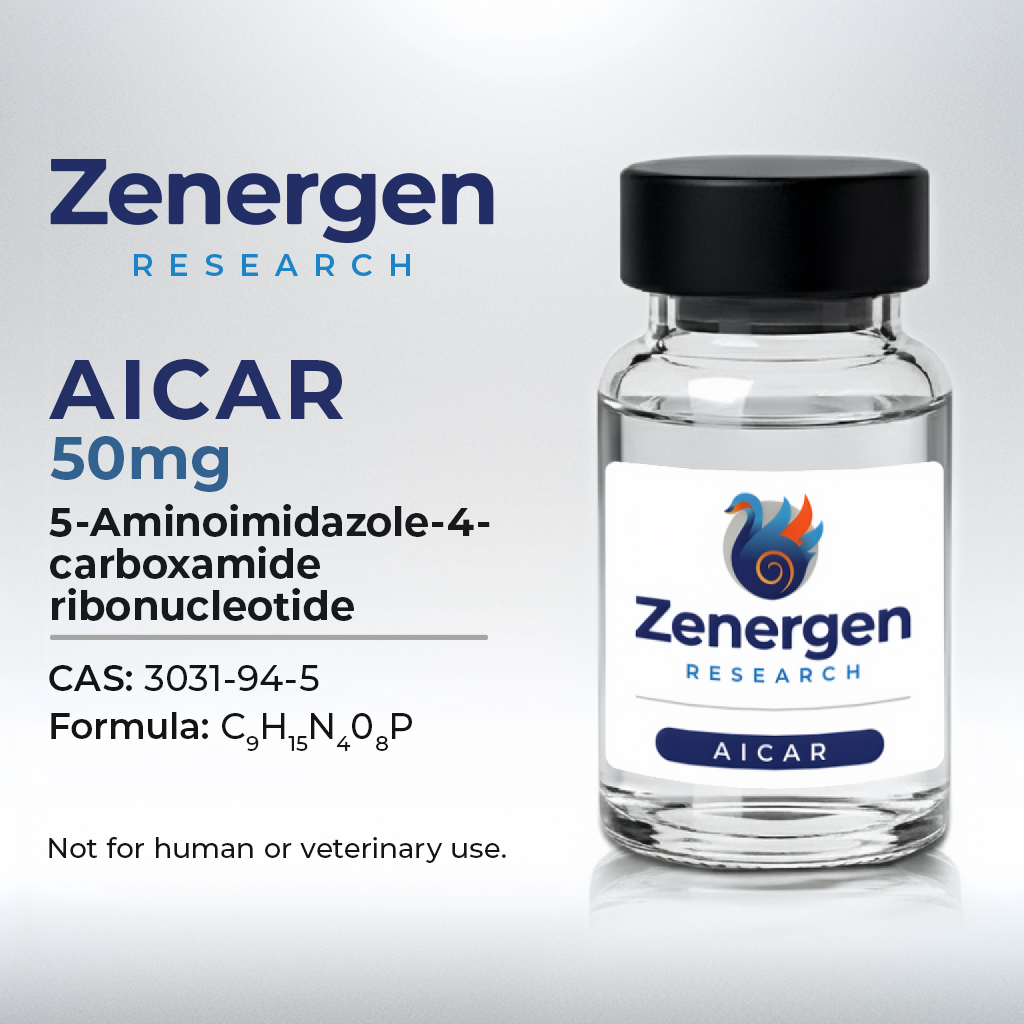
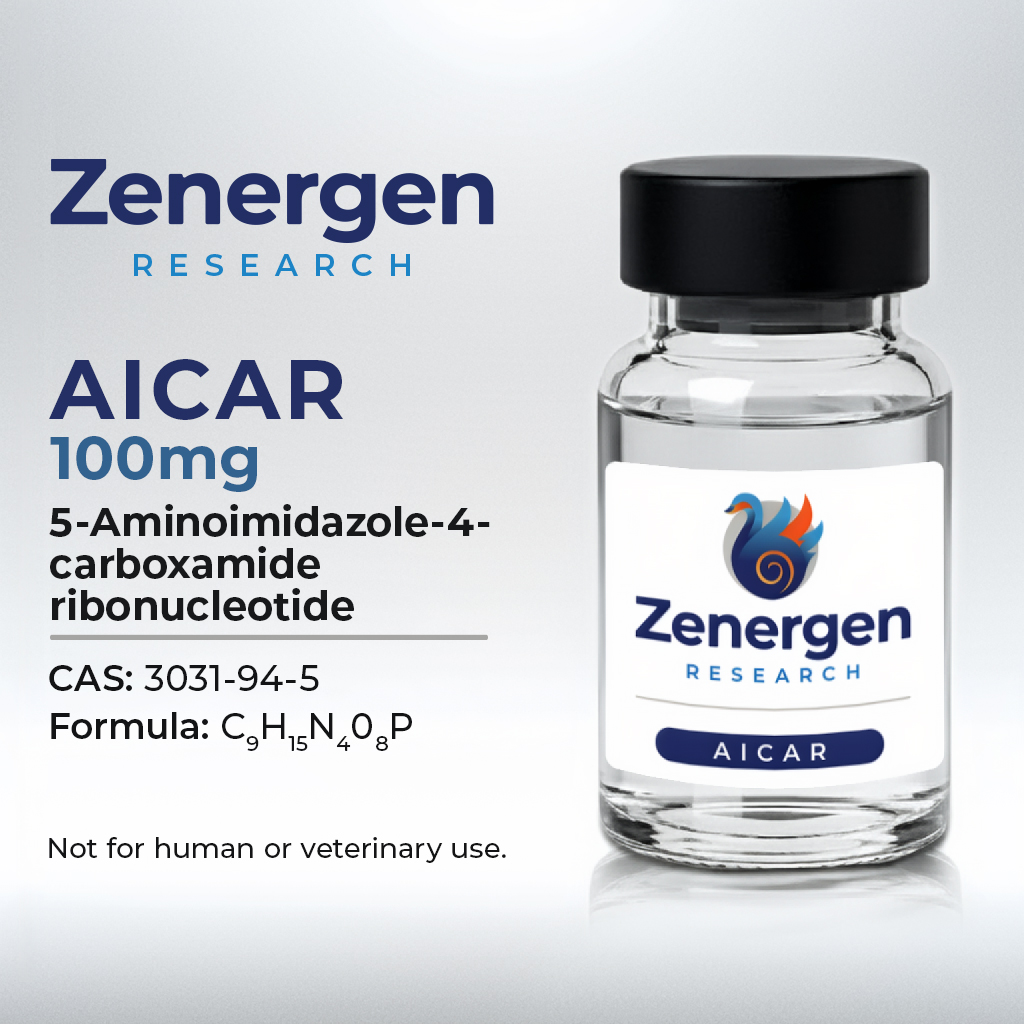
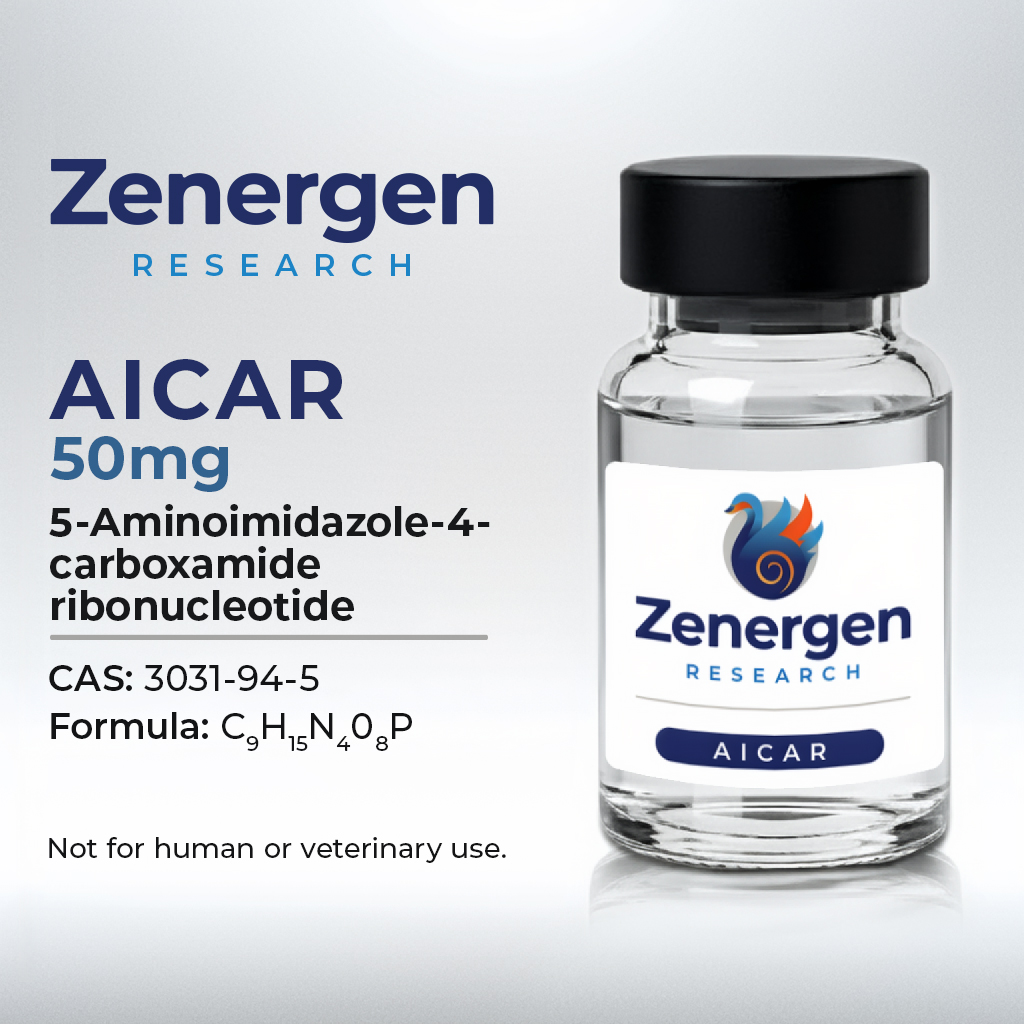
AICAR
$65.00
Quantity
Description
AICAR is a research compound (5-Aminoimidazole-4-carboxamide ribonucleotide) that acts as an AMP analog activating AMP-activated protein kinase (AMPK). Preclinical models show its effects on mitochondrial biogenesis, fatty acid oxidation, and glucose metabolism through AMPK–PGC-1α signaling. AICAR is used in metabolic and energy regulation research investigating peptide-independent AMPK activation pathways.
For research use only. Not for human consumption.
Additional Information
Weight: 0.08 lbs
Dimensions: 0.87 × 1.18 × 0.87 in
Size: 5mg, 10mg
This product is intended solely for research purposes. It is not authorized for use in humans or animals and should only be handled by trained personnel in appropriate laboratory settings.
Highlights
Structural Properties
Selectivity: Strong affinity and selectivity for MC1R
Solubility: Easily soluble in water
Storage Conditions: Store refrigerated at 36–46 °F (2–8 °C)
Form: White to off‑white lyophilized powder
Biochemical Profile
Chemical Formula: C₇₈H₁₁₁N₂₁O₁₉
Molecular Weight: 1646.85 g/mol
CAS: 75921‑69‑6
Structure: Linear peptide composed of 13 amino acids
Biological Mechanism
Melanotan is a synthetic peptide studied for its selective MC1R activation, supporting pigmentation, UV protection, and potential anti‑inflammatory effects.
Protective Actions
UV Defense
Increased melanin formation enhances natural protection against ultraviolet radiation.
DNA Maintenance
May support nucleotide excision repair processes to safeguard genetic material.
Inflammation Control
Helps lower production of pro‑inflammatory cytokines.
Core Biological Pathways
MC1R Engagement
Binds selectively to melanocortin‑1 receptors located on melanocytes.
cAMP Cascade
Elevates intracellular cAMP levels, triggering activation of protein kinase A.
MITF Regulation
Promotes expression of the microphthalmia‑associated transcription factor.
Melanin Synthesis
Stimulates tyrosinase and other enzymes involved in melanogenesis.
Research Highlights
Research on Melanotan has uncovered a wide range of potential applications beyond its role in pigmentation:
Photoprotection Research
Main focus on UV defense:
• Promotes higher melanin density without direct sun exposure
• Lowers markers of UV‑induced DNA damage
• Demonstrates protective effects in models of photosensitivity disorders
• Maintains benefits even after treatment is stopped
Anti‑Inflammatory Properties
Emerging immunomodulatory activity:
• Decreases production of TNF‑α and IL‑1β
• Inhibits NF‑κB pathway activation
• Shows protective effects in inflammatory disease models
• Potential applications in autoimmune research
Neuroprotective Insights
Unexpected effects in the central nervous system:
• Shields neurons from oxidative stress
• Reduces markers of neuroinflammation
• Investigated for possible roles in neurodegenerative conditions
• Improved outcomes observed in stroke models
Clinical Research Directions
Translational applications under study:
• Trials in erythropoietic protoporphyria
• Research on polymorphous light eruption
• Investigations into vitiligo repigmentation
• Studies on solar urticaria protection
Possible Research-Related Effects
Melanotan has generally shown a strong safety profile due to its selective receptor activity:
Mild Nausea
Occasional, short‑lived gastrointestinal discomfort reported in some participants.
Facial Flushing
Temporary vasodilation leading to brief redness or warmth.
Pigmentation Changes
Expected increase in skin darkening and melanocytic nevus pigmentation.
Fatigue
Slight tiredness noted in certain studies.
Its selectivity for MC1R helps reduce off‑target reactions commonly associated with broader melanocortin agonists.
Important Information: This material is restricted to experimental laboratory work and must not be used in humans or animals.
References
Thymosin beta‑4 denotes new directions towards developing prosperous anti‑aging regenerative therapies. Int Immunopharmacol, 2023.
Thymosin beta‑4 improves endothelial function in diabetic endothelial cells via stem cell therapy. Stem Cell Res Ther, 2022.
Thymosin beta‑4: A potential tool in healing middle ear lesions in adult mammals. Int Immunopharmacol, 2023.
Thymosin β4 preserves vascular smooth muscle phenotype in atherosclerosis via LRP1 regulation. Int Immunopharmacol, 2023.
Protective effects of thymosin β4 against ethanol injury in corneal keratocytes. BMC Ophthalmol, 2022.

About Us
Zenergen Research Products is committed to supplying high-purity peptides intended for research use, with an emphasis on quality control and dependable delivery.
Contact Us
Copyright© 2026 Zenergen Research - All Rights Reserved.
All products offered by Zenergen are intended strictly for laboratory research purposes only. These compounds are not authorized for human or veterinary use and must be handled exclusively by qualified professionals in controlled research environments. They are not intended for diagnostic, therapeutic, or clinical applications. Statements made on this website have not been evaluated by the U.S. Food and Drug Administration.