

BPC-157
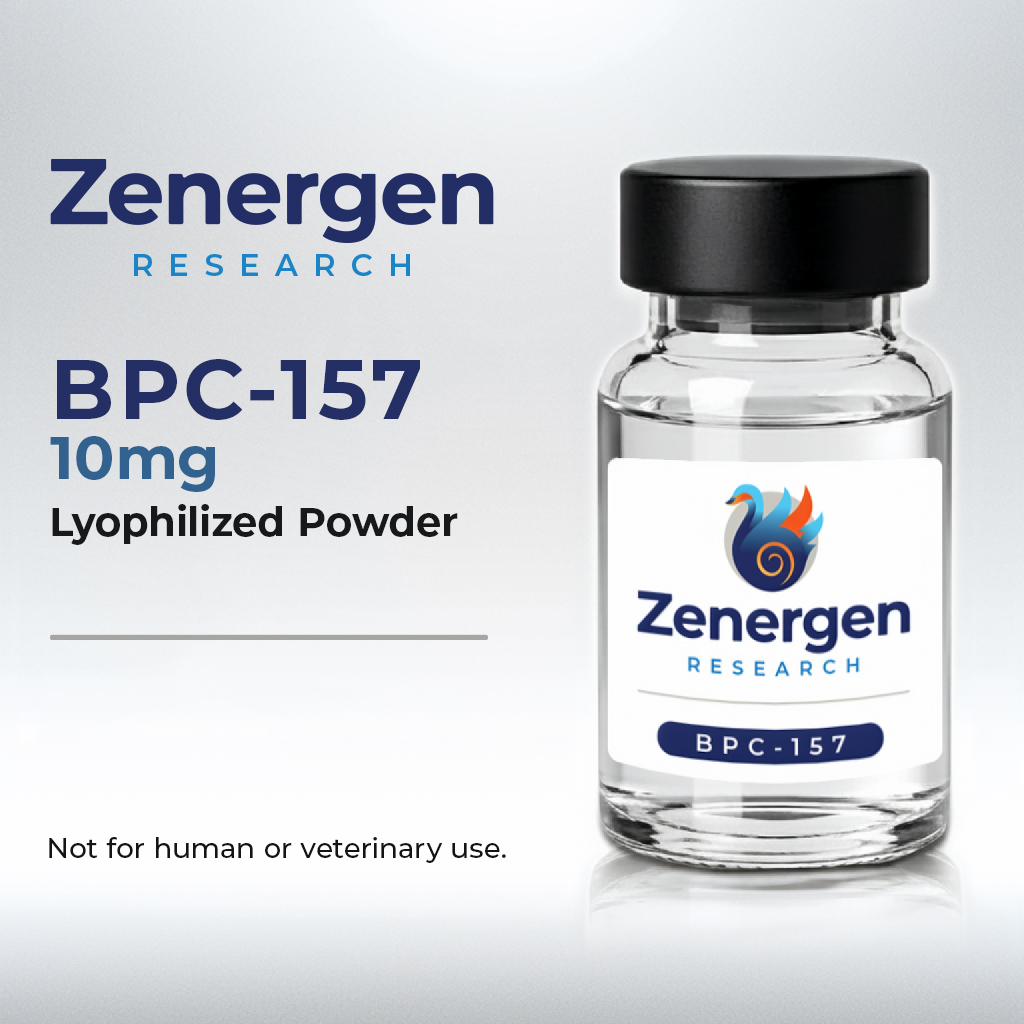
BPC-157
$65.00
Quantity
Description
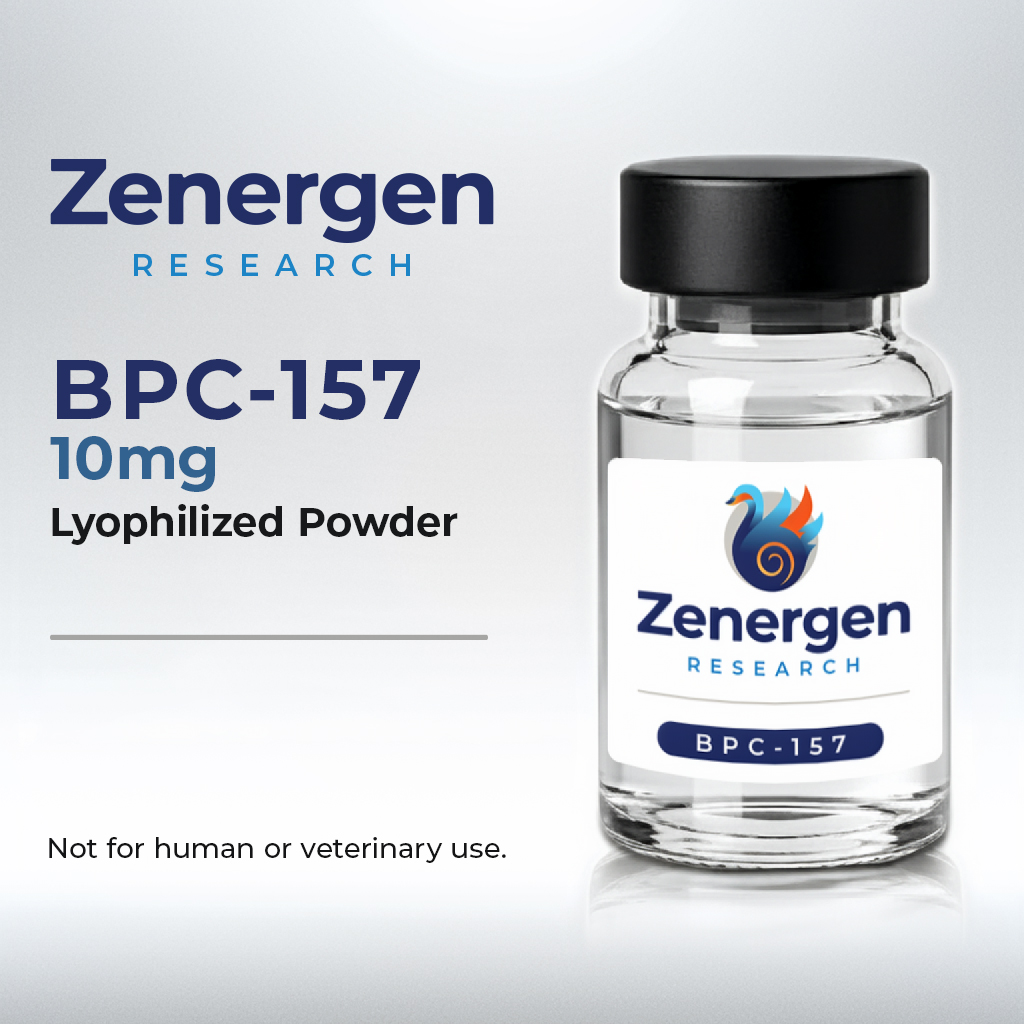
BPC‑157, known as “Body Protection Compound‑157,” has become a notable focus in laboratory research. First identified in human gastric secretions, this peptide exhibits remarkable protective and reparative effects across multiple tissue types. What sets BPC‑157 apart is its resilience—while many peptides degrade rapidly, BPC‑157 maintains stability even under harsh conditions such as gastric acid, making it a highly valuable candidate for diverse experimental investigations.
Additional Information
Weight: 0.08 lbs
Dimensions: 0.87 × 1.18 × 0.87 in
Size: 10mg, 5mg
This product is intended solely for research purposes. It is not authorized for use in humans or animals and should only be handled by trained personnel in appropriate laboratory settings.
Highlights
Structural Properties
Appearance: White to off‑white lyophilized powder
Solubility: Readily dissolves in water
Stability: Stable across a wide range of pH conditions
Storage Conditions: Refrigerate at 36‑46 °F (2‑8 °C)
Biochemical Profile
Chemical Formula: C₆₂H₉₈N₁₆O₂₂
Molecular Weight: 1419.54 g/mol
Sequence: Gly‑Glu‑Pro‑Pro‑Pro‑Gly‑Lys‑Pro‑Ala‑Asp‑Asp‑Ala‑Gly‑Leu‑Val
CAS: 137525‑51‑0
Biological Mechanism
BPC‑157 functions via diverse intriguing pathways that scientists continue to investigate:
Core Mechanisms
Vascular Support
Encourages the development of new blood vessels, creating efficient routes for nutrients and repair agents to reach injured tissues.
Growth Signal Enhancement
Amplifies production of mediators such as VEGF and IGF‑1, orchestrating cellular recovery and regeneration.
Nitric Oxide Pathways
Engages with NO signaling to optimize circulation and improve intercellular communication.
Collagen Remodeling
Facilitates organized collagen deposition, strengthening tissue structure and flexibility during repair.
Inflammatory Modulation
Reduces harmful inflammatory signals while promoting restorative pathways.
Protective Pathways
Cellular Defense
Protects cells against oxidative and environmental stressors.
Tissue Stability
Helps preserve tissue integrity under challenging conditions.
Systemic Integration
Appears to harmonize healing responses across multiple organ systems.
Research Highlights
The variety of BPC‑157’s demonstrated properties in research is remarkable:
Digestive System Research
Originating from gastric proteins, BPC‑157 demonstrates strong potential in gastrointestinal studies:
• Accelerated healing of ulcers
• Defense against inflammatory bowel disorders
• Restoration of intestinal barrier integrity
• Repair of fistulas (abnormal organ connections)
Musculoskeletal Applications
Evidence highlights faster recovery in:
• Muscle and ligament tears
• Tendon injuries, including difficult Achilles tendon cases
• Bone fractures and delayed unions
• Joint and cartilage damage
Neurological Insights
Preclinical findings suggest neuroprotective activity:
• Mitigation of traumatic brain injury effects
• Possible benefits in stroke recovery models
• Support for nerve regeneration and repair
• Reduction of neuroinflammatory responses
Organ Safeguards
Research indicates protective roles across multiple organs:
• Liver: Resistance to toxins and alcohol‑related injury
• Heart: Reduced cardiac stress damage and improved recovery
• Kidneys: Protection against drug‑induced nephrotoxicity
• Pancreas: Potential benefits in pancreatitis models
Vascular Effects
BPC‑157 shows notable vascular activity:
• Rapid angiogenesis (new blood vessel formation)
• Endothelial cell protection
• Enhanced blood flow to injured tissues
• Potential applications in vascular occlusion treatment
Possible Research-Related Effects
BPC‑157 is distinguished by its strong safety profile demonstrated across multiple research models:
Limited Side Effects
Research consistently indicates minimal to no significant adverse reactions.
Absence of Toxicity
Even at elevated experimental doses, no toxic outcomes have been documented.
Local Administration Response
Occasional mild irritation may occur at injection sites.
Broad Systemic Tolerance
Demonstrates excellent tolerance across diverse laboratory models.
This exceptional safety record underscores BPC‑157’s strong value in ongoing research applications.
Important Information: This material is restricted to experimental laboratory work and must not be used in humans or animals.
References
Stable gastric pentadecapeptide BPC 157: Novel therapy in gastrointestinal tract. Curr Pharm Des, 2018
Stable gastric pentadecapeptide BPC 157 therapy: Responsive disorders and clinical trials. Pharmaceuticals, 2024
BPC 157 enhanced wound healing in alkali burns. Drug Des Devel Ther, 2020
Gastric pentadecapeptide body protection compound BPC 157 and its role in accelerating musculoskeletal soft tissue healing. Cell Tissue Res, 2019
BPC 157 therapy in inflammatory bowel disease. Biomedicines, 2024
BPC 157 for tissue repair: Mechanism insights and therapeutic potential. Int J Mol Sci, 2023
BPC 157 therapy in neurodegenerative diseases. Front Pharmacol, 2023
Pentadecapeptide BPC 157 and the central nervous system. Neural Regen Res, 2022

About Us
Zenergen Research Products is committed to supplying high-purity peptides intended for research use, with an emphasis on quality control and dependable delivery.
Contact Us
Copyright© 2026 Zenergen Research - All Rights Reserved.
All products offered by Zenergen are intended strictly for laboratory research purposes only. These compounds are not authorized for human or veterinary use and must be handled exclusively by qualified professionals in controlled research environments. They are not intended for diagnostic, therapeutic, or clinical applications. Statements made on this website have not been evaluated by the U.S. Food and Drug Administration.