

DSIP
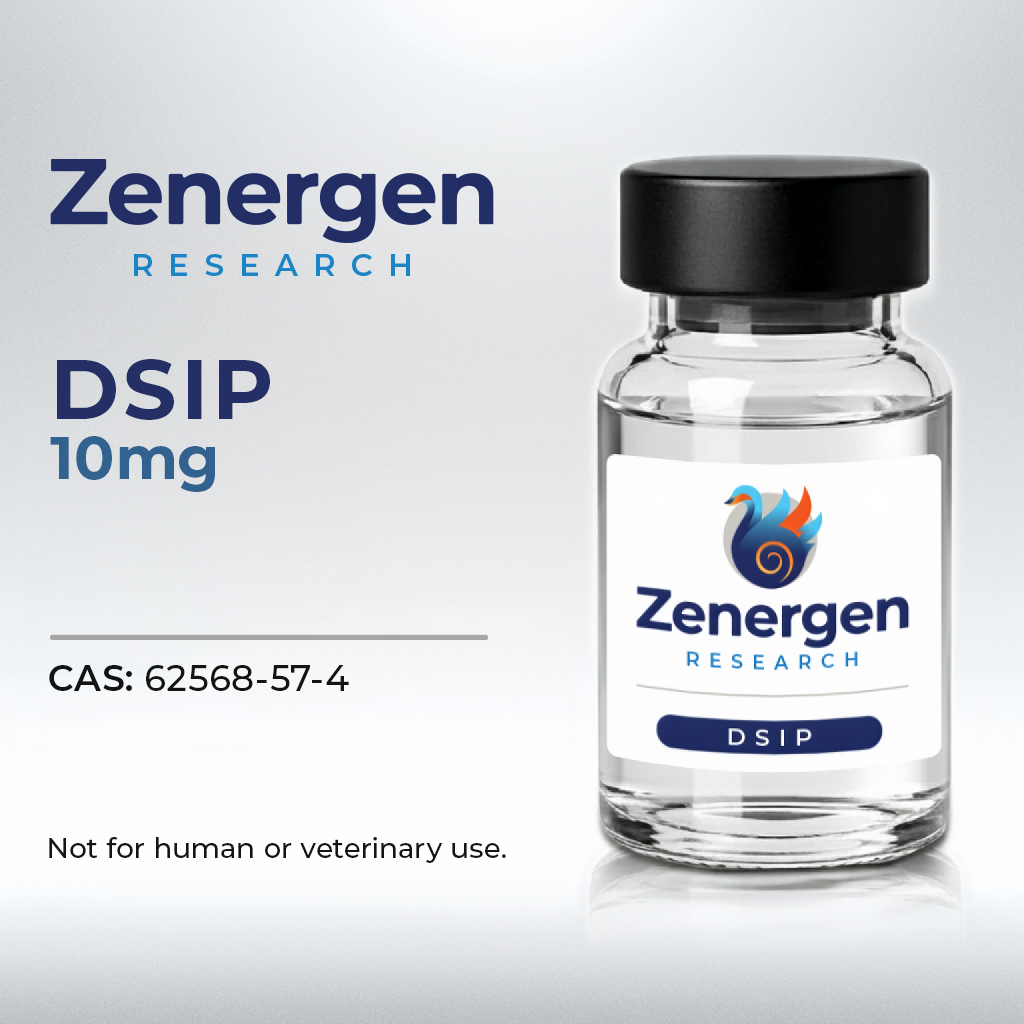
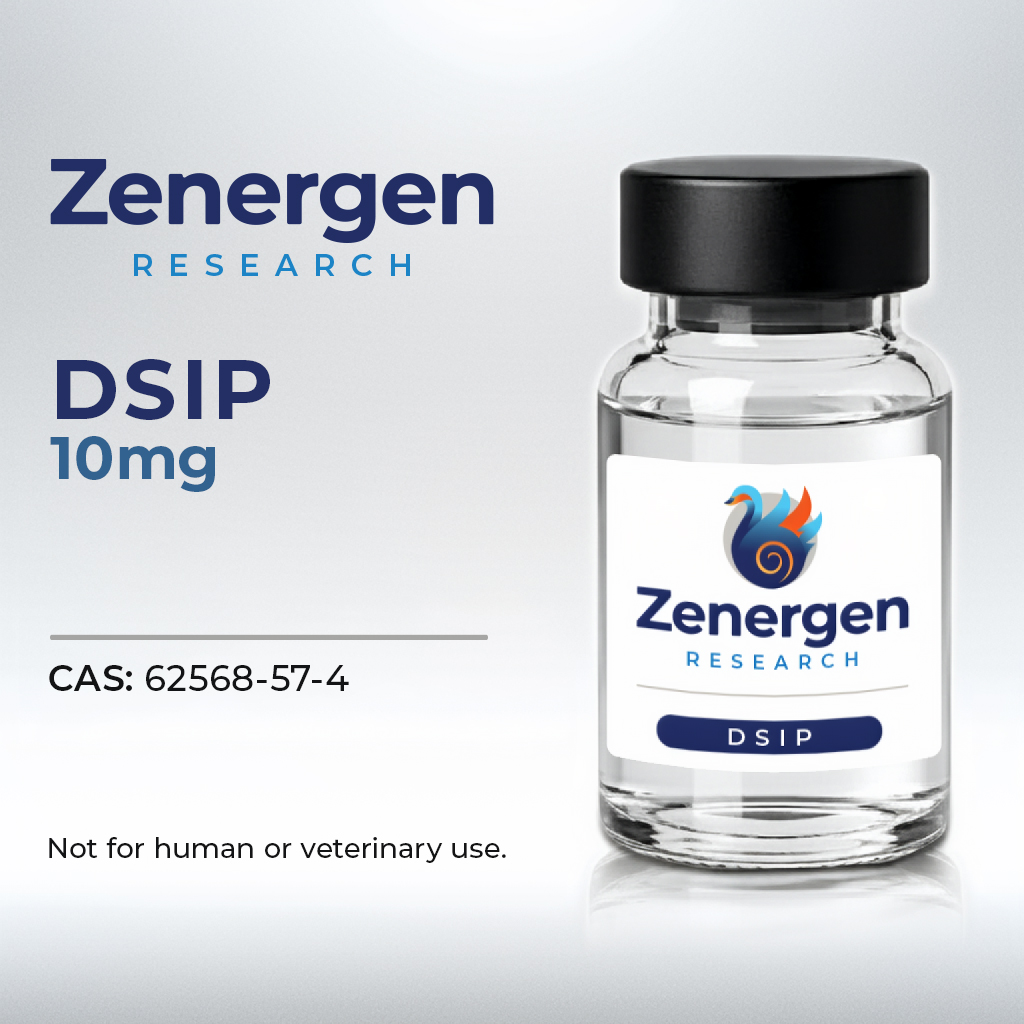
DSIP
$80.00
Quantity
Description
DSIP is considered one of the most remarkable natural modulators of sleep. While its name implies a straightforward role in promoting rest, scientific findings show that DSIP functions as a complex neuromodulator whose influence extends well beyond sleep regulation. Rather than acting in isolation, this peptide resembles a conductor guiding an orchestra, coordinating multiple physiological processes such as sleep–wake rhythms, stress management, pain regulation, and immune activity.
A distinctive feature of DSIP is its capacity to cross the blood–brain barrier, making it an especially valuable molecule for advancing research in neuroscience.
Additional Information
Weight: 0.08 lbs
Dimensions: 0.87 × 1.18 × 0.87 in
Size: 5mg, 10mg
This product is intended solely for research purposes. It is not authorized for use in humans or animals and should only be handled by trained personnel in appropriate laboratory settings.
Highlights
Structural Properties
Appearance: White, freeze‑dried powder
Solubility: Readily dissolves in water
Blood–Brain Barrier: Capable of penetrating the BBB
Storage Conditions: Maintain refrigerated at 2–8 °C (36–46 °F)
Biochemical Profile
Chemical Formula: C₃₅H₄₈N₁₀O₁₅
Molecular Weight: 848.81 g/mol
Amino Acid Sequence: Trp‑Ala‑Gly‑Gly‑Asp‑Ala‑Ser‑Gly‑Glu
CAS Number: 62568‑57‑4
Biological Mechanism
DSIP functions through a range of complex pathways that coordinate sleep regulation, stress adaptation, and diverse physiological processes.
Core Mechanisms
Neurotransmitter Regulation
Impacts the signaling of glutamate, GABA, and serotonin networks
HPA Axis Control
Adjusts activity within the hypothalamic–pituitary–adrenal system
Circadian Rhythm Support
Assists in aligning internal biological clocks
Cellular-Level Actions
Deep Sleep Facilitation
Promotes restorative slow‑wave sleep stages
Optimization of Sleep Architecture
Enhances the overall organization and balance of sleep cycles
Sleep Spindle Stimulation
Boosts spindle generation and continuity during sleep
Research Highlights
Scientific investigations have highlighted DSIP’s wide-ranging influence on numerous physiological pathways, underscoring its complex function as a neuromodulator.
Sleep Enhancement
Evidence highlights notable improvements in sleep outcomes:
• Extended duration of slow‑wave (deep) sleep
• Greater efficiency and overall sleep quality
• Shorter time to fall asleep
• More consistent sleep with fewer interruptions
• Restorative sleep without residual morning fatigue
Stress Response Regulation
Findings indicate protective effects against stress:
• Lower cortisol secretion under stressful conditions
• Improved adaptation to prolonged stress exposure
• Strengthened resilience to stressors
• Reduced impact of stress‑related damage
• Stabilization of autonomic nervous system activity
Neuroprotective Actions
Research demonstrates benefits for brain health:
• Defense against excitotoxic damage
• Decreased oxidative stress within neurons
• Enhanced recovery following brain injury
• Increased neuronal survival rates
• Potential applications in neurodegenerative disease models
Pain Regulation
Studies suggest analgesic potential:
• Elevated pain tolerance
• Reduced perception of chronic pain
• Modulation of neural pain pathways
• Synergy with natural pain control mechanisms
• Non‑addictive approaches to pain relief
Immune System Modulation
Evidence supports immunological benefits:
• Strengthened immune activity during sleep
• Enhanced antibody production
• Improved T‑cell performance
• Lower levels of inflammatory markers
• Protection against immune suppression
Metabolic & Cardiovascular Benefits
Research points to systemic advantages:
• Better glucose regulation
• Increased insulin sensitivity
• Stabilization of blood pressure
• Improved heart rate variability
• Enhanced vascular performance
Possible Research-Related Effects
DSIP is typically well‑tolerated, producing only minor side effects. Its endogenous presence within the human body supports a strong and reassuring safety profile
No Withdrawal Effect
Discontinuation does not lead to rebound insomnia
Headache
Occasional reports of mild head pain
Dizziness
Uncommon episodes of slight light‑headedness
Digestive System
Rare instances of minor gastrointestinal discomfort
Allergic Response
Non‑Addictive
No indication of tolerance development or dependency
Safety Overview
DSIP is generally well‑tolerated, with only minor side effects observed. Its natural presence within the body supports a strong safety record.
Because DSIP is naturally present within the human body, it is associated with a reassuring safety profile
Important Information: This material is restricted to experimental laboratory work and must not be used in humans or animals.
References
Delta sleep-inducing peptide: an unresolved neurochemical puzzle. Luthringer R, 2006
Comprehensive overview of DSIP functions. Khvatova EM, 1995
DSIP and neuronal response to glutamate. Sudakov KV, 2001
Motor recovery via DSIP post-stroke in rats. Graf MV, 2021
Neuropeptides in sleep: therapeutic implications. Chen L, 2024
Phosphorylated DSIP and memory restoration at altitude. Gangwar A, 2018
DSIP-induced growth hormone release. Iyer KS, McCann SM, 1987
DSIP and Deltaran in stress mitigation. Koplik EV, 2022
DSIP modulation of cytokine activity. Walleus H, 1995
DSIP interaction with the opioid system. Yukhananov RY, 1992

About Us
Zenergen Research Products is committed to supplying high-purity peptides intended for research use, with an emphasis on quality control and dependable delivery.
Contact Us
Copyright© 2026 Zenergen Research - All Rights Reserved.
All products offered by Zenergen are intended strictly for laboratory research purposes only. These compounds are not authorized for human or veterinary use and must be handled exclusively by qualified professionals in controlled research environments. They are not intended for diagnostic, therapeutic, or clinical applications. Statements made on this website have not been evaluated by the U.S. Food and Drug Administration.