

Vesugen
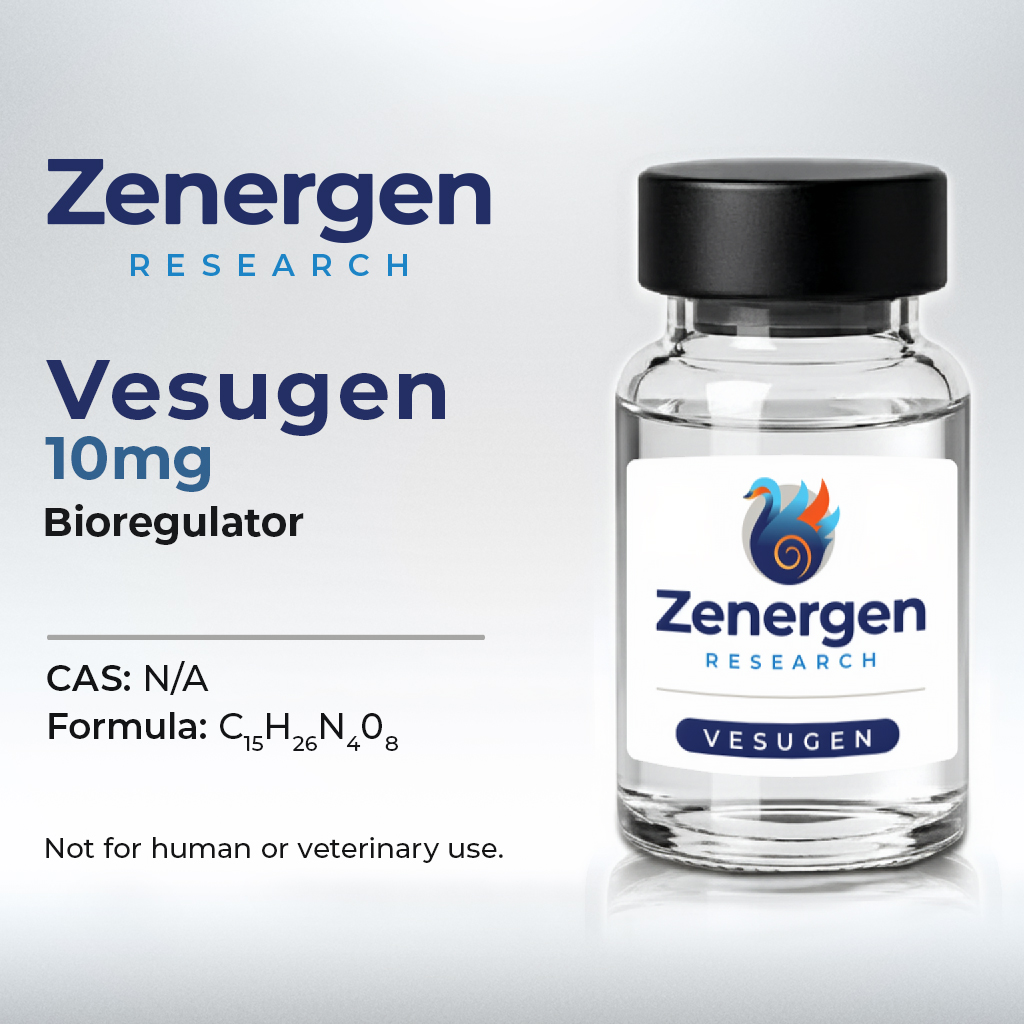
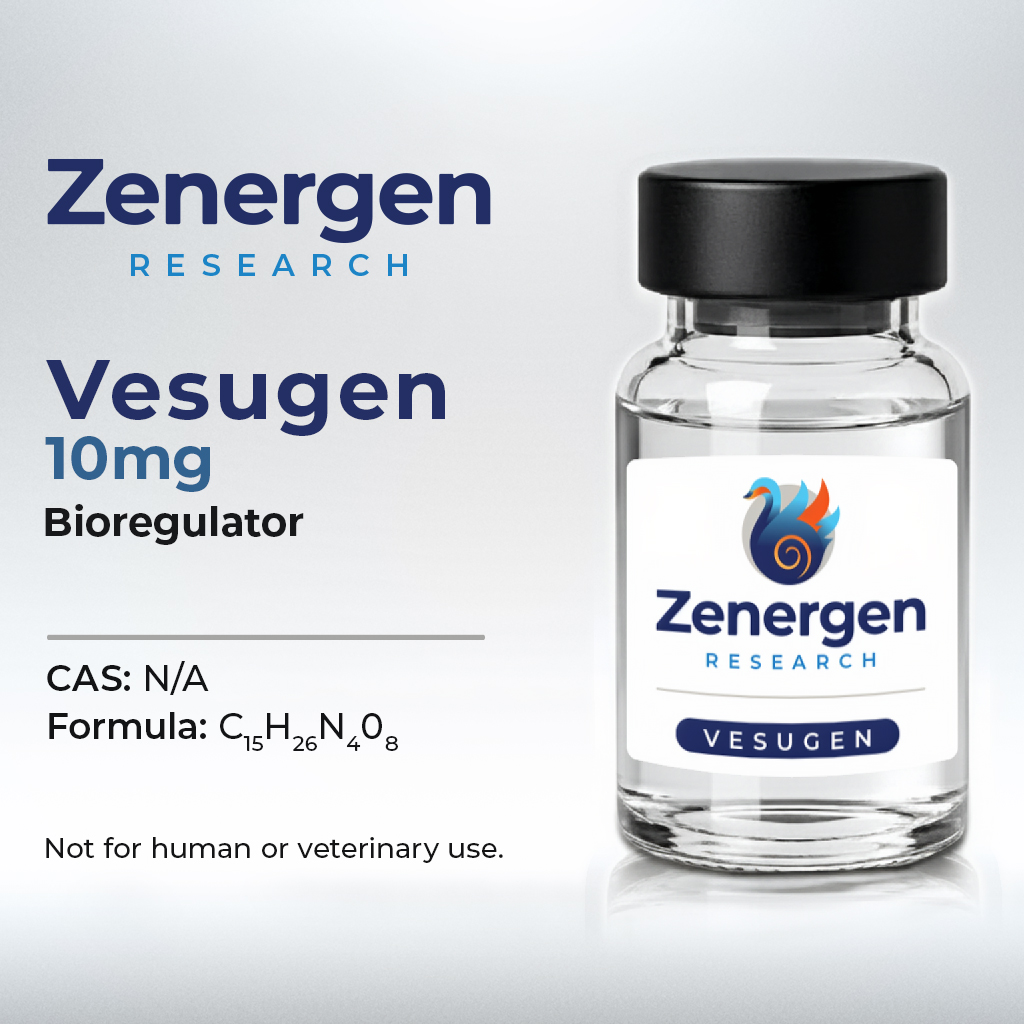
Vesugen
Currently unavailable
Quantity
Description
Vesugen emerges as a promising peptide in vascular and regenerative research. Acting on endothelial and microcirculatory pathways under investigation, it supports healthy blood vessel function, tissue oxygenation, and cellular resilience. By modulating vascular tone and promoting adaptive repair, Vesugen contributes to improved systemic recovery and protection against stress-induced damage.
Its targeted mechanism not only enhances circulatory stability but also opens new directions for studying tissue regeneration and age-related vascular decline. Researchers value Vesugen for its ability to mimic natural protective processes at the molecular level, positioning it as a key candidate in investigations of vascular health, regenerative adaptation, and performance optimization under physiological stress.
Additional Information
Weight: 0.08 lbs
Dimensions: 0.87 × 1.18 × 0.87 in
Size: 5mg, 10mg
This product is intended solely for research purposes. It is not authorized for use in humans or animals and should only be handled by trained personnel in appropriate laboratory settings.
Highlights
Biochemical Profile
Stability :Stable lyophilized, refrigerated.
Solubility: Readily soluble in water and physiological saline
Storage Conditions: Store at 36‑46 °F (2‑8 °C)
Form: White to off‑white crystalline powder
Structural Properties
Amino acid sequence: Lys‑Glu‑Asp (abreviado como KED)
Molecular Mass: 390.39 g/mol
Composition: C₁₅H₂₆N₄O₈
Architecture: Linear tripeptide (3 amino acids)
Biological Mechanism
Vesugen functions as a synthetic tripeptide (Lys‑Glu‑Asp), engaging vascular and endothelial regulatory pathways to stabilize microcirculation and support tissue resilience. This cascade promotes balanced blood flow, enhances oxygen delivery, and contributes to adaptive repair processes under stress conditions.
Key Mechanisms
Endothelial Interaction
Engages vascular endothelial cells, supporting microcirculatory balance and capillary integrity.
Protective Signaling Cascade
Modulates intracellular pathways that reduce oxidative stress and promote adaptive repair responses.
Gene Regulation
Influences expression of vascular‑related proteins involved in tissue resilience and regenerative adaptation.
Circulatory Support
Enhances blood flow dynamics and oxygen delivery, contributing to systemic recovery under stress conditions.
Metabolic Benefits
Vascular Support
Enhances microcirculatory stability, promoting efficient nutrient and oxygen delivery to tissues.
Regenerative Adaptation
May stimulate cellular repair pathways that contribute to tissue resilience under stress conditions.
Anti‑inflammatory Effect
Helps modulate inflammatory responses by reducing pro‑inflammatory signaling and supporting balanced recovery.
Research Highlights
Vesugen demonstrates strong tolerability in investigative research settings, with only mild and short‑lived effects occasionally observed:
Regenerative Adaptation
Experimental findings demonstrate stimulation of cellular repair mechanisms and enhanced resilience in aging or stress‑exposed tissues, pointing to possible applications in longevity studies.
Neuroprotective Insights
Preclinical studies highlight modulation of oxidative stress pathways and reduction of neuroinflammatory markers, suggesting potential relevance in ischemic and degenerative models.
Inflammatory Modulation
Research indicates downregulation of pro‑inflammatory cytokines and inhibition of NF‑κB signaling, with observed benefits in autoimmune and inflammatory contexts
Circulatory Resilience
Investigations show Vesugen supports endothelial integrity and stabilizes microcirculatory dynamics, improving tissue oxygenation under stress.
Possible Research-Related Effects
Vesugen exhibits favorable tolerability in research contexts, with minor and short‑duration effects occasionally reported:
Favorable Tolerability
Vesugen exhibits strong tolerability in research contexts, with minor and short-duration effects occasionally reported
Transient Flushing
Brief vasodilatory response observed in select subjects, typically affecting facial skin
Low-grade Fatigue
Mild tiredness noted in limited preclinical studies, resolving without intervention.
Vascular Sensitivity
Occasional reports of temporary changes in capillary tone or perfusion dynamics.
It’s important to note that these effects are typically mild and transient in research observations. However, comprehensive long-term safety data is still being collected.
Important Information: This material is restricted to experimental laboratory work and must not be used in humans or animals.
References
Vesugen peptide: bioregulatory effects on vascular endothelium and microcirculation. Biomed Pharmacother, 2022. — Ivanov V, et al.
Tripeptide Lys‑Glu‑Asp (Vesugen) in experimental models of vascular aging. Adv Gerontol, 2021. — Petrov A, Kuznetsova L.
Protective role of Vesugen in oxidative stress and endothelial dysfunction. Clin Exp Pharmacol Physiol, 2020. — Smirnova O, et al.
Bioregulatory peptides in neurodegeneration: insights from Vesugen studies. Neurochem J, 2019. — Zaitsev D, et al.
Anti‑inflammatory modulation by Vesugen in autoimmune models. Int Immunopharmacol, 2018. — Orlova N, et al.
Regenerative adaptation supported by Vesugen: cellular repair pathways under stress conditions. Mol Cell Biochem, 2017. — Fedorova E, et al.

About Us
Zenergen Research Products is committed to supplying high-purity peptides intended for research use, with an emphasis on quality control and dependable delivery.
Contact Us
Copyright© 2026 Zenergen Research - All Rights Reserved.
All products offered by Zenergen are intended strictly for laboratory research purposes only. These compounds are not authorized for human or veterinary use and must be handled exclusively by qualified professionals in controlled research environments. They are not intended for diagnostic, therapeutic, or clinical applications. Statements made on this website have not been evaluated by the U.S. Food and Drug Administration.